
GDS Training
How Professional GDS Training Prevents Costly Airline Debit Memos (ADMs)
Protect your agency revenue by eliminating booking churn, fictitious PNRs, married segment violations, and fare calculation errors
By Project OTA | 30 Sep, 2026 | 7 min read
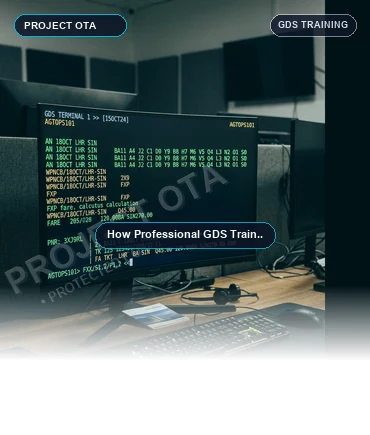
Learn the most frequent causes of airline debit memos (ADMs) and how rigorous GDS terminal training empowers agents to adhere to airline booking policies and fare rules.
1. The Devastating Financial Impact of Airline Debit Memos (ADMs)
For any IATA-accredited travel agency or high-volume ticketing desk, Airline Debit Memos (ADMs) represent one of the most perilous threats to operational profitability. Issued by airlines through the IATA Billing and Settlement Plan (BSP) or ARC in the United States, an ADM is an automated monetary penalty billed against the agency for non-compliance with ticketing rules, fare tariffs, or GDS inventory policies.
A single overlooked fare rule or a misused booking class can result in an ADM ranging from $50 to several thousand dollars. When untrained or semi-trained ticketing agents repeatedly commit booking errors, accumulated ADMs can wipe out months of hard-earned agency commissions and even trigger IATA bank guarantee forfeiture or ticketing authority revocation.
2. The Most Frequent Booking Errors That Trigger Costly ADMs
Airline revenue protection departments deploy automated audit algorithms that inspect every PNR transaction in real time. The majority of ADMs originate from predictable, preventable operational missteps:
Married Segment Abuse: Airlines frequently price origin-and-destination connecting flights lower than single point-to-point legs. Booking a married segment (e.g., London to Singapore via Dubai) and subsequently cancelling the onward flight to secure a cheap local seat violates airline inventory integrity and results in heavy full-fare differential debit memos.
Booking Churn and Speculative Inventory Holding: Repeatedly booking and cancelling identical flights to extend ticketing time limits generates high GDS distribution fees for the airline. Carriers actively bill agencies for excessive churn and speculative PNRs created without genuine passenger intent.
Fictitious Passenger Names: Entering placeholder names (such as 'TEST/MR' or 'MOUSE/MICKEY') to hold promotional fare classes violates carrier terms and almost always triggers automatic administrative penalty fees.
3. Eliminating Reissue and Exchange Errors with Automated Tools
Historical data demonstrates that over 60% of high-value ADMs stem from manual ticket exchanges and reissuances. When a traveler requests date or routing changes, the agent must evaluate historical fare rules, penalty fees, seasonal tax variations, and currency conversion adjustments.
Professional GDS training teaches agents to abandon high-risk manual fare construction in favor of certified automated reissue utilities—such as Sabre Automated Ticket Exchange (WFR / WFRF) and Amadeus Ticket Changer (ATC / FXF). These automated utilities evaluate historical cat-16 and cat-31 fare rules, compute precise fare differences and reissue penalties, and populate compliant endorsement lines that shield the agency from airline liability.
4. The 24-Hour Void Window: Deadlines, Time Zones, and Airline Policies
Another recurring source of agency revenue loss involves misunderstood void deadlines. In theory, travel agencies are permitted to void an issued electronic ticket within a grace period, cancelling the financial transaction without incurring airline cancellation penalties.
However, void rules vary critically by airline and regional BSP jurisdiction. While some carriers permit voids until 23:59 local agency time on the date of issuance, others enforce strict 24-hour timers or restrict voids once the flight departure date falls within 48 hours. When an agent mistakenly executes a void past the permissible window, the GDS coupon status may register as void, but the airline's revenue accounting system bills the agency for the full value of the ticket plus administrative chargeback fees.
5. Institutionalizing Zero-Error Protocols Through Continuous Training
Preventing ADMs is not a one-time fix; it requires institutional discipline, standardized Standard Operating Procedures (SOPs), and ongoing employee education. Agencies that invest in formal GDS training programs experience an immediate 80% to 95% reduction in debit memo volume within the first quarter.
A robust agency training program instills rigorous queue management habits, ensures daily auditing of ticketing queues (Queue 50, Queue 70), enforces mandatory supervisor approvals for manual exchanges, and trains staff on how to formally dispute invalid ADMs through BSPlink within the 14-day statutory dispute window.
Frequently Asked Questions
What is an Airline Debit Memo (ADM)?
An ADM (Agency Debit Memo) is a financial penalty or adjustment notice issued by an airline to a travel agency via IATA BSPlink or ARC to collect underpaid fares, taxes, uncollected penalty fees, or fines for violating carrier booking and ticketing policies.
Can an agency dispute an ADM issued by an airline?
Yes. Travel agencies typically have 14 days from the date of issue to submit a formal online dispute via BSPlink or ARC Memo Manager, supported by PNR history, audit trails, and fare calculation documentation.
How does married segment abuse occur in GDS terminals?
Married segment abuse happens when an agent books a connecting itinerary because lower booking classes are open, and then manipulates or cancels one of the segments to use only the desired flight. Airline audit systems flag this immediately and bill the agency for the full undiscounted fare.
How does Project OTA's training program prevent ADMs?
Project OTA's GDS training curriculum incorporates dedicated modules on airline booking policies, automated fare exchanges (ATC / Sabre Exchange), APIS compliance, married segment integrity, and exact void cutoff procedures to protect agencies from costly penalties.
Key Takeaways
- Airline Debit Memos (ADMs) can drain 10% to 20% of an agency's net profitability through automated BSP penalty billings.
- Understand the primary triggers of ADMs: married segment breakages, booking churn, speculative holding, and incorrect commission deductions.
- Train ticketing staff on automated ticket reissue tools (Sabre Ticket Exchange, Amadeus ATC) to avoid manual calculation blunders.
- Enforce strict 24-hour void protocols and local BSP midnight cutoffs to prevent unauthorized post-departure void chargebacks.
Eliminate costly booking penalties and safeguard your agency's cashflow. Enroll your ticketing team in Project OTA's GDS Training Program to achieve zero-error compliance and flawless ticketing execution.
Talk to Project OTA