
OTA SEO
OTA Search Engine Optimization & Technical Indexing Guide
Master canonical URLs, sitemaps, trailing slashes, and Core Web Vitals for travel portals
By Project OTA | 25 Aug, 2026 | 8 min read
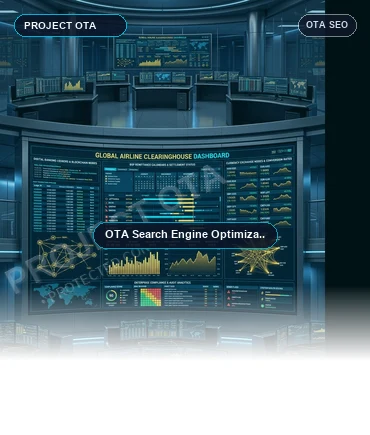
Optimizing OTA websites for search engines requires strict canonical URL discipline, dynamic XML sitemaps, robots.txt crawl budget management, and fast SSG/SSR page rendering.
Why technical SEO determines OTA search rankings
In the highly competitive online travel industry, technical SEO structure is as vital as fare inventory. Search engines like Google crawl millions of travel pages daily, evaluating page load speed, URL structure, canonical tags, mobile usability, and indexability.
Travel sites that suffer from duplicate content, trailing-slash mismatches, broken legacy links, or slow dynamic rendering are penalized with lower search rankings and 'Page with redirect' or '404 Not Found' warnings in Google Search Console.
Canonical URL discipline and trailing slash architecture
Next.js and modern frontend frameworks allow routes to be accessed with or without trailing slashes (e.g. `/blog` vs `/blog/`). Setting `trailingSlash: true` in your build configuration creates clean static directory structures (`/blog/index.html`).
To prevent Google Search Console from flagging duplicate pages or redirect loops, every internal link, sitemap entry, and `<link rel="canonical">` tag must explicitly include trailing slashes (e.g. `https://projectota.com/blog/`). Legacy numeric paths (`/blog/1/`) should issue instant redirects to readable text slugs.
Robots.txt management and crawl budget optimization
Googlebot has a limited crawl budget for every domain. Allowing search bots to crawl non-essential binary files (like `/favicon.ico`) or search parameter strings (like `/?q={search_term_string}`) wastes crawl budget and causes 'Crawled - currently not indexed' notifications.
A clean `robots.ts` configuration allows full crawling of public routes (`/`, `/blog/`, `/contactus/`, `/ourrepresentatives/`) while disallowing internal Next.js assets (`/_next/`), API routes (`/api/`), binary assets (`/favicon.ico`), and query strings (`/*?*`).
Structured data & JSON-LD for travel organizations and services
Structured data (JSON-LD) helps search engine crawlers understand your travel agency business models, GDS API integrations, representative locations, and flight/hotel offerings.
Embedding Schema.org types like `Organization`, `WebSite`, `Service`, and `TechArticle` with exact canonical HTTPS URLs increases your site's eligibility for rich search snippets, sitelinks, and elevated search positions.
Frequently Asked Questions
Why does Google Search Console show 'Page with redirect' for travel sites?
This occurs when Googlebot crawls non-canonical URL variants (such as http://, www, or URLs missing trailing slashes) and follows a 301/308 redirect to the primary canonical URL. Setting consistent canonical tags resolves validation.
How do trailing slashes affect Next.js static travel sites?
Setting trailingSlash: true generates static HTML files inside named folders (/contactus/index.html), eliminating web server 404 errors and ensuring clean URL structures.
What schema markup should an online travel agency use?
OTAs should implement Schema.org Organization, WebSite, Service, and Article JSON-LD markup with canonical URLs, site names, and exact service descriptions.
Key Takeaways
- Enforce canonical URL consistency and trailing slash rules across all static and dynamic travel routes.
- Optimize robots.txt crawl budgets by disallowing binary assets (/favicon.ico) and search query strings (/*?*).
- Implement structured schema markup (JSON-LD) for travel organizations, services, and article pages.
Project OTA builds high-speed, SEO-optimized travel booking engines and OTA portals — engineered for top search engine indexation, zero 404 errors, and maximum conversion rates.
Talk to Project OTA