
Payments
Payment and Fraud Controls for Travel Booking Platforms
Protect margins with payment validation, risk rules and reconciliation
By Project OTA | 19 Jun, 2026 | 5 min read
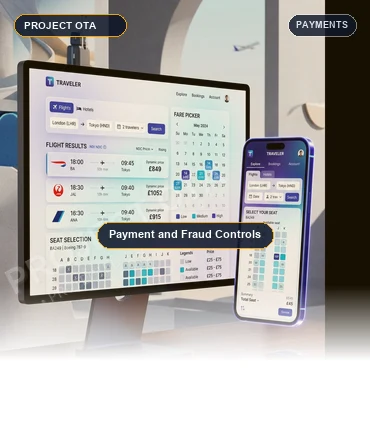
Travel payments are high-risk because tickets are time-sensitive and valuable. Platforms need risk controls before ticket issue.
Why travel payments need extra control
Airline tickets can be issued quickly and are difficult to recover after fraud. That makes travel booking platforms attractive targets for stolen cards, fake identities and chargeback abuse.
The platform should validate customer, payment, route, fare, booking value and risk signals before automatic ticketing.
Controls to add
Useful controls include 3D Secure, velocity checks, blocked route rules, device signals, manual review queues, high-value booking holds and mismatch detection between passenger and payer data.
For B2B portals, credit limits, wallet balances and agent approval rules reduce financial exposure.
Reconciliation
Every order should connect customer payment, supplier cost, ticket status, refunds, fees and commission. Without reconciliation, agencies can miss losses caused by failed tickets, partial refunds or chargebacks.
Clear finance reports help the business understand true margin by supplier, route, agent and product.
Frequently Asked Questions
Should tickets be issued immediately after payment?
Low-risk bookings can be auto-ticketed, but high-risk bookings should be held for review based on rules and agency policy.
Do B2B portals need fraud controls?
Yes. B2B portals need credit, wallet, permission and booking-limit controls even when customers are sub-agents.
Key Takeaways
- Validate payment and booking risk before ticket issue.
- Use ticketing delay rules for high-risk orders.
- Reconcile supplier cost, customer payment, refunds and fees.
Project OTA adds payment, risk and reconciliation workflows to travel platforms that need stronger operational control.
Talk to Project OTA